Skip to content

Closing The Loop On Plastic

We believe plastic is a valuable material. It is crucial for the safe and efficient distribution of our products, and has a lower carbon footprint than many alternative materials. It has its place, but that place is definitely not littering our streets, rivers and oceans.

We need to keep plastic inside the circular economy – where it is reused, recycled or composted. And where it is kept in a loop, to stop it from ever finding its way into the environment.

Our goals

  • Virgin plastic reduction

    Reduce our virgin plastic footprint – by 30% by 2026, and 40% by 2028[a]

  • Reusable, recyclable or compostable plastic packaging

    100% of our plastic packaging to be reusable, recyclable or compostable – by 2030 (for rigids) and 2035 (for flexibles)[a]

  • Recycled plastic

    Use 25% recycled plastic in our packaging by 2025

  • Collection and processing

    Collect and process more plastic packaging than we sell by 2025

You can read more about the progress we are making globally towards these targets here.

Less Plastic

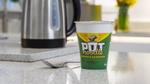
A Chicken & Mushroom Pot Noodle sitting on a grey kitchen counter, with a fork and kettle.

Pot Noodle paper pots

Pot Noodle has introduced a new pot made from 90% FSC-certified paper, reducing plastic use while remaining recyclable. The design includes a thin plastic layer for freshness and can be recycled with cardboard. This innovation supports Unilever’s goal to cut virgin plastic use and could remove 4,000 tonnes annually.

Image shows sachet for Colman’s sausage casserole

Paper Sachets for Colman’s

We have moved all our Colman’s sachets out of plastic and into a new FSC-certified paper material. The new pouches replace existing unrecyclable multi-material laminate sachets with a solution that has just two layers, meaning they can now be recycled in households.

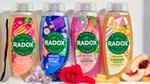
Four different fragrances of Radox Therapy

Refillable Radox

In 2023, our Radox bottles were redesigned so they can be refilled and reused. The bottles are made from 50% post-consumer recycled (PCR) plastic and can be refilled with Radox’s new 500ml refill packs, which use 74% less plastic.

Better Plastic

Image shows five bottles of TRESemme product

Black Plastic

We pioneered the development of a new detectable black pigment for our black plastic bottles and packaging, so they can now be ‘seen’ by recycling plant scanners and sorted for recycling. The new technology means that an additional 2,500 tonnes of plastic bottles could now potentially be sorted and sent for recycling each year in the UK alone.

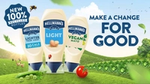
Image shows three Hellmann’s mayonnaise bottles on top of an animated green hill

Recycled Plastic Bottles

We’re keeping plastic in the loop by making more of our products fully recyclable and using more recycled plastic back into our packaging. Our Dove and Hellmann’s bottles are all made with 100% recycled plastic.

Image shows Simple biodegradable wipes

Simple Biodegradable Wipes

All our Simple wipes are now available in a biodegradable material. The wipes are made using renewable plant fibres and sustainable wood pulp.

Supporting sustainable behaviours

We’re committed to helping our shoppers and employees to do the right thing, supporting a better understanding of the complex plastic landscape and helping people to reduce waste and recycle more often.

As a member of the On-Pack Recycling Label (ORPL) scheme, we’re adding OPRL’s recycling labels across as many of our products as possible, providing recycling guidance which is simple, clear and consistent.

Our brands are also helping shoppers to make more sustainable choices with on-pack messaging and campaigns which encourage shoppers to recycle more and waste less.

Every year we support WRAP’s #RecycleWeek campaign, sharing the recyclability of our products and encouraging people to recycle them.

We also recently partnered with The Economist’s Education Foundation to create a Plastics, Packaging and Sustainability resource for young people and students. The free workbook is all about plastics and packaging to encourage young people between the ages of 9-14 to think about: why we use plastic, the role plastic does have in our society and what more could and should be done to keep plastic out of the environment.

 Image shows pages of Unilever’s Plastics, Packaging and Sustainability resource

Partnering for progress

For some of the barriers to better recycling and packaging innovation there are no easy fixes and sustainable solutions depend on many elements working together.

We believe that partnerships and collaboration across the full value chain – from the supplier and manufacturer, through to the shopper and waste management companies – is needed to tackle the biggest challenges we face to creating a waste-free world.

That’s why we are a founding member of the UK Plastics Pact which has a vision for an economy where plastics never become waste. It brings together the entire plastics packaging value chain behind this vision – governments, businesses, local authorities, NGOs and consumers – and commits to a set of world-leading targets. These include eliminating problematic or unnecessary single-use packaging through redesign, innovation or alternative (reuse) delivery models.

Working in collaboration with partners we’re investing in research to develop the next generation of packaging and plastic recycling, finding ways to deliver the same high-quality products and experience to our consumers whilst eliminating un-necessary plastics and waste.

We were a founding member with four other branded manufacturers in the UK to launch The Flexible Plastic Fund – a cross-industry collaboration to drive flexible plastic collection and recycling in the UK, so it can be re-used again and again.

Bottles icon in white

Working with Veolia, Charpak Ltd and HSSMI we’re looking at creating a closed-loop system to recycle 100% clear rigid PET. We are researching the ability to use the non-food contact recycled PET produced in this process in our home and personal care products.

recycling icon white

With The University of Liverpool, The University of Manchester and Bright Green Plastics, we’re looking at the technological advancements needed to increase the use of recycled plastic made from High Density Polyethylene – one of the most common plastics used in packaging.

[a]

(1, 2) This goal was updated in 2024. Please refer to our 2023 Annual Report and Accounts for details of our previous goal.

Back to top